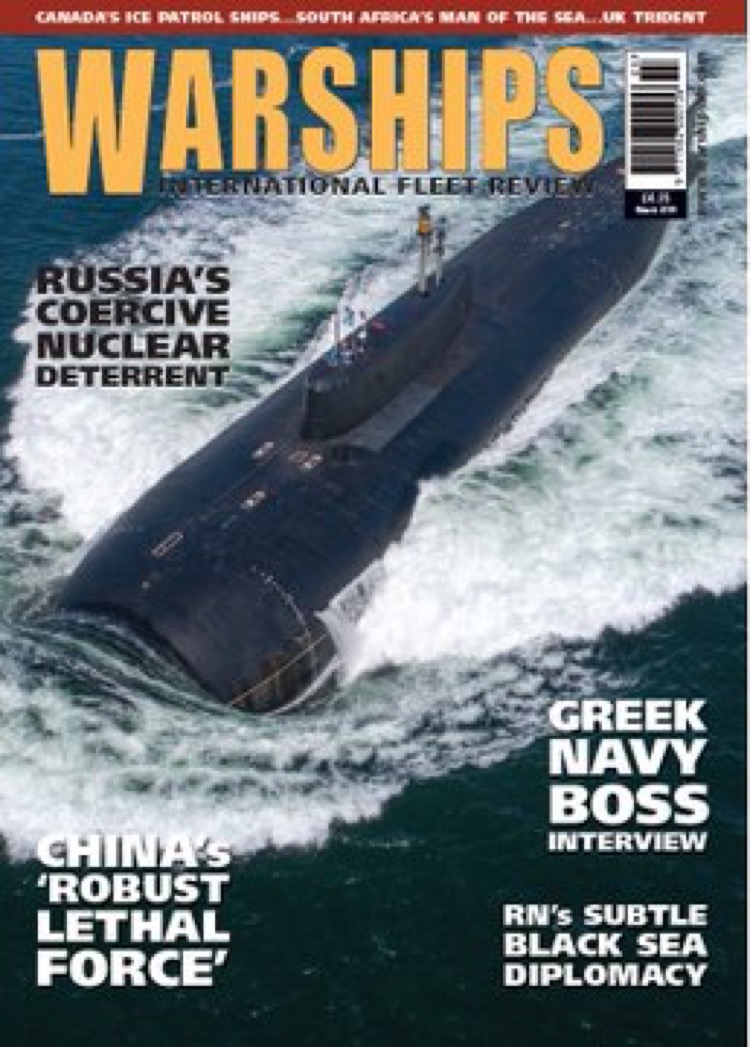
I was having a short discussion on Twitter this week, and discovered that my admittedly limited knowledge of ice-breaking is apparently as obsolete as the Canadian Coast Guard's ice-breaking fleet is.
As noted in a previous post, CCGS Louis S. St. Laurent, the CCG's largest and arguably most capable icebreaker, was commissioned 50 years ago this year. Although she received an extensive refit that saw her outfitted with new engines and a longer bow with a bubbler system, she is reaching the end of her lifetime.
 |
| CCGS Louis S. St. Laurent showing off her bubbler system. |
The CCG's only other "Heavy Gulf" class icebreaker, the Terry Fox, is a ship taken up from commercial trade. She also has a bubbler system. Bubbler systems are designed to reduce the friction between the bow of the ship and the ice, allowing the ship to ride up higher on the ice to break it with the weight of the ship. Although newer than the Louis, the Terry Fox is far from young, as she dates from the 1980s.
 |
| Terry Fox, similarly showing off her bubbler system. |
The CCG's heavy icebreakers are supplemented by a group of "Medium Gulf" icebreakers, the Type 1200 or Pierre Radisson class. With Pierre Radisson herself built in 1978, she is older than Terry Fox.
 |
| Pierre Radisson underway in Halifax Harbour. |
 |
| Amundsen underway in Halifax Harbour |
 |
| Henry Larsen departing Halifax Harbour |
 |
| Henry Larsen arriving in Halifax at sunrise. |
The dedicated icebreaker fleet is supplemented by a fleet of light ice-breaking aids-to-navigation tenders. I believe these ships are fairly conventional as icebreakers go.
 |
| CCGS Edward Cornwallis is one of a class of Type 1100 light icebreaker / major navaids tenders. |
 |
| Earl Grey is one of two Type 1050 medium navaids tenders / light icebreakers. |
All of these ships have a conventional arrangement of shafted propellers, and are intended to break ice with their bows in a forward direction.
The state-of-the-art in ice-breaking has changed, though. Newer designs incorporate azimuth thrusters, and many are designed to break ice with their sterns, and moving backwards through the ice. Even the fancy bubbler systems in "newer" Canadian Coast Guard icebreakers are now at least partially obsolete, replaced by modern paint coatings and the lubricating effect of the azimuth thrusters.
In response to some posts on Twitter between myself and Dr. Samuel McLean, Aker Arctic (their website features a video of one of their designs breaking ice in an aft-sideways direction) was kind enough to chime in with some expert information. The Twitter thread follows.


The shape of the icebreaker pictured above can be seen here, although good luck reading the text (you might have to get your browser to translate for you).


So there you have it - apparent even from this short thread, ice-breaking technology has moved on considerably.
The CCG's future heavy icebreaker, the John G. Diefenbaker, will be fitted with two conventional wing shafts with a single azimuth thruster in the middle - from the look of her, she is designed to break ice with her bow, and she will also be fitted with a bubbler system as well as two bow thrusters. Interestingly, Aker Arctic is a member of the design team.
Although initially intended to incorporate azimuth thrusters for breaking ice going astern, the Navy's new HARRY DEWOLF class of Arctic/Offshore Patrol Vessels (AOPVs) are being built with conventional shafted propellers (with a bow thruster) to allow ice-breaking by the bow. I have no information to suggest whether they have been built with a bubbler system, but perhaps the bow thruster can help with that.
 |
| Future HMC Ships HARRY DEWOLF and MARGARET BROOKE under construction last weekend at the Halifax Shipyard. |
 |
| Close-up of HARRY DEWOLF's conventional icebreaking bow and bow thruster. |
 |
| HARRY DEWOLF's conventional twin shafted-propeller arrangement (propellers not fitted in this photo) and her twin rudders. |